
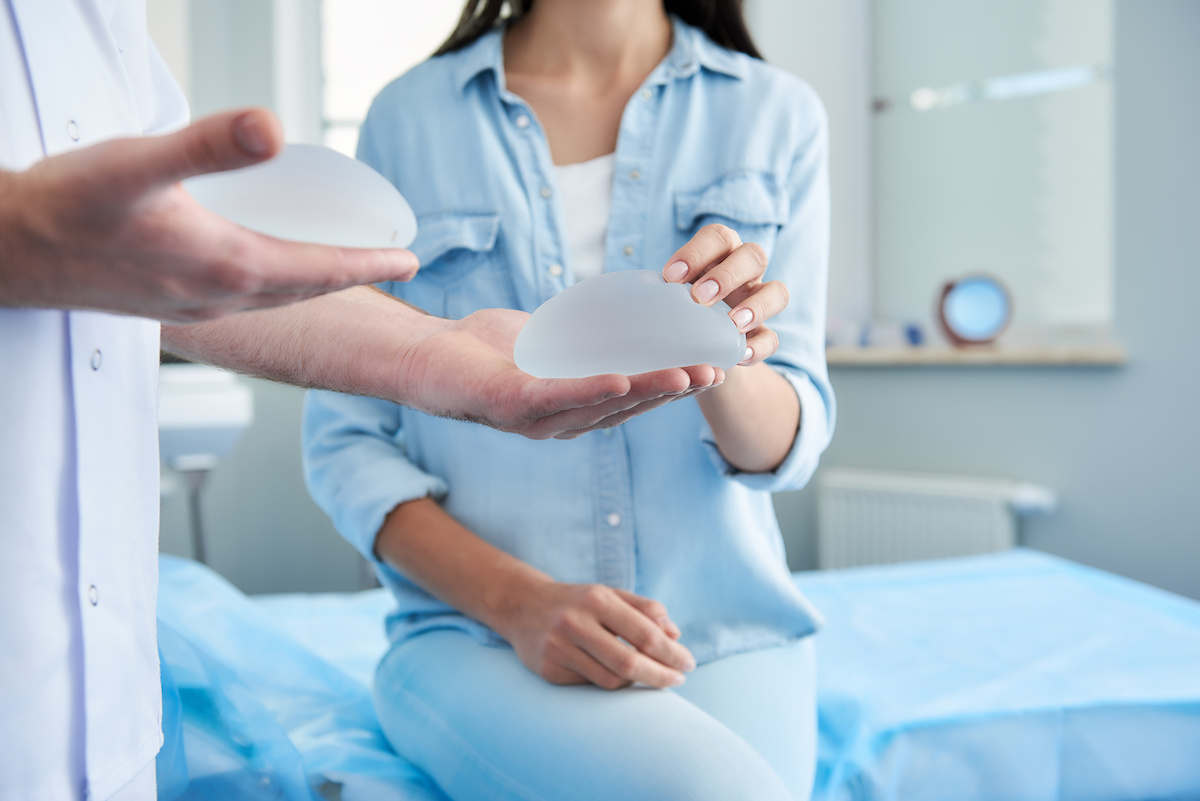
Oftentimes, women can find themselves wanting to change something about their breasts. Whether it is cosmetic, comfort, or a combination of the two, there are many reasons that this desire comes to pass. Whatever the reason, deciding to get breast implants can come with some questions regarding the procedure. While our team can discuss a few of the main questions here, a consultation can get you more information from your doctor.
In your consultation with Dr. O’Neill or Dr. Dixon, he/she will discuss the differences between the two main types of implants and how he can meet your body image goals. In the meantime, we’ve compiled some quick information to help you make more informed decisions.
What Are The Different Types of Breast Implants?
The two types of breast implants are saline and silicone. This means that your breast implant or the sac surgically placed under your breast tissue, is filled with either saline or silicone gel. Depending on your overall goals for feeling and looking — you must decide which implant is right for you. Here, we break down the details of each of these options.
Silicone Gel Breast Implants
- FDA Approved
- Feels More Natural
- Predictable Results With Set Fill Volume
- Two Shell Surface Options (Smooth vs. Textured)
- Multiple Profiles Available (height vs width classifications)
Saline Filled Breast Implants
- FDA Approved
- Filled with Saltwater Solution
- Slightly Firmer Than Silicone Gel
- Placed in the Body Without Fluid, Then Filled to the Predetermined Size
- Two Shell Surface Options (Smooth vs. Textured)
- Multiple Profiles Available
How Long Do Breast Implants Last?
A well-placed and good-quality breast implant should last over a decade. Over time, the chance of something becoming a problem does get bigger, but that does not always occur. Sometimes, this is impacted by the age you receive the implant or other health factors in your life.
Sometimes women consider doing a breast implant exchange if they want to change the shape or size of the implant or if there were prior complications that need to be corrected. Of course, the implants can also be removed at any time.
What Does Recovery Look Like?
This is an outpatient procedure, meaning you can go home shortly after it is done. Most patients will spend 30-45 minutes in the recovery room after the surgery. You will not be able to drive yourself home due to the anesthesia.
There are follow-up appointments with Dr. O’Neill and Dr. Dixon, the first is usually 1 to 4 days after the surgery. This is often paired with the advice to reduce activity in the days post-procedure to ensure the recovery is smooth. There will be soreness. While most activity can return to normal, there will be lifting restrictions up to 6 weeks after the procedure. Most of your recovery care is explained by your doctor, so you do not have to worry about figuring it out yourself.
What Does The Cost Look Like?
As is the case with most elective cosmetic procedures, health insurance plans do not usually cover it. This means it is important to understand your financial responsibility before going into further detail about this procedure. It includes the surgeon’s fees, facility costs, anesthesia fees, implant costs, medications and prescriptions, post-surgery garments, and medical tests. There is financing available to consider as you make your decision.
Contact The O’Neill Plastic Surgery Team
Are you looking to change something regarding the appearance of your breasts? If you are considering breast implants, it is important to know all of your options. Visit Dr. O’Neill, Dr. Dixon, and the expert plastic surgery team to discuss your breast augmentation questions, concerns, and end goals. Our office is conveniently and privately located on Daniel Island in Charleston, SC. Call today at 843-881-2130 or visit our website today.

Share